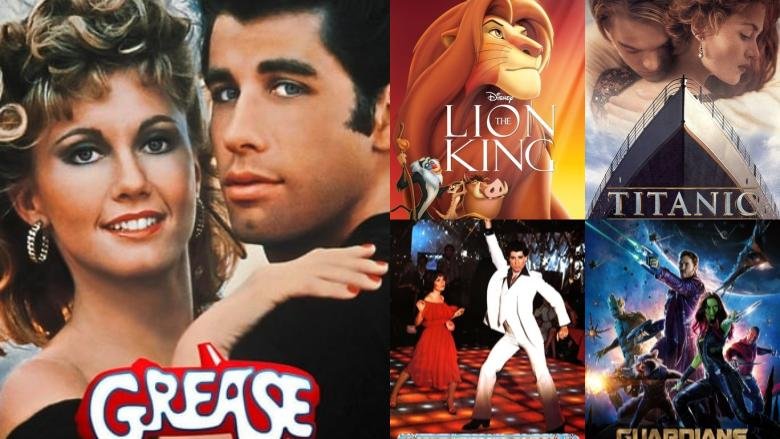
The flickering lights of a movie theater, the roar of a blockbuster, the quiet intensity of a dramatic scene—they all share a secret ingredient that truly elevates the experience: music. More than just background noise, Music, Movies, and Iconic Soundtracks form a powerful trinity, capable of defining eras, launching careers, and etching cinematic moments into our collective memory. These aren't just collections of songs; they're cultural phenomena, sonic tapestries that transcend their silver screen origins to become enduring works in their own right.
From the pulsating rhythms of disco that compelled a generation to dance, to the raw energy of alt-rock anthems that soundtracked the angst of the nineties, film music has continuously evolved, mirroring and often shaping the zeitgeist. This isn't merely about good songs; it's about the magic that happens when music and moving images fuse, creating something unforgettable.
At a Glance: What Makes a Soundtrack Legendary?
- Beyond the Screen: Iconic soundtracks often become more famous and impactful than the films they accompany, shaping culture, fashion, and even language.
- Soundtrack vs. Score: Understand the crucial difference: a soundtrack is a curated collection of existing songs (or sometimes original vocal tracks), while a score is original instrumental music composed specifically for the film.
- Defining Eras: The best film albums capture the essence of their time, from disco and New Wave to grunge, hip-hop, and contemporary electronic sounds.
- Commercial Powerhouses: Many soundtracks have broken sales records, turning films into global musical events and launching or cementing artist careers.
- The Curator's Touch: The selection of songs isn't arbitrary; it's a meticulous art, transforming a collection of tracks into a cohesive narrative tool.
The Symphony of Cinema: Soundtrack vs. Score
Before we dive into the albums that rocked our worlds, let's clarify a distinction often blurred in casual conversation: the difference between a "soundtrack" and a "score."
Think of a film score as the emotional undercurrent, the original instrumental music typically composed by a single artist (like John Williams for Star Wars or Hans Zimmer for Inception). It's crafted specifically to enhance the mood, propel the narrative, and underscore character development without drawing overt attention to itself.
A soundtrack, on the other hand, is a compilation of songs—either pre-existing, newly commissioned vocal tracks, or a mix of both. These are often distinct, recognizable songs that might have been hits before the movie, or become hits because of it. A brilliant soundtrack is more than just a playlist; it's a carefully curated selection that reflects the film's themes, characters, and historical context, becoming a character in itself. The best soundtracks have moved far beyond the film, becoming cultural touchstones that define a generation.
Spinning Through Time: Five Decades of Iconic Soundtracks
The evolution of the film soundtrack mirrors the arc of popular music itself, each decade leaving an indelible mark. Let's journey through the decades, highlighting the masterpieces that redefined what film music could be.
The 1970s: The Disco Inferno and Reggae Revelation
The 70s saw music take center stage, with soundtracks becoming extensions of burgeoning cultural movements. Saturday Night Fever (1977) stands as the undisputed king of this era, a phenomenon that didn't just accompany a movie, but defined an entire global movement. The Bee Gees' falsetto-laden hits like "Stayin' Alive" and "Night Fever" transformed dance floors worldwide, making disco mainstream and selling over 40 million copies—a testament to music's power to shape fashion, nightlife, and culture. It’s widely considered the greatest film soundtrack of all time.
But disco wasn't the only sound breaking through. The Harder They Come (1972), Jimmy Cliff's reggae masterpiece, introduced Jamaican music to an international audience, with soul-stirring tracks like "Many Rivers to Cross." This wasn't just music; it was a cultural export that influenced musicians globally. And then there was Superfly (1972), Curtis Mayfield's monumental album, which often overshadowed the crime film it accompanied. With tracks like "Freddie's Dead," Mayfield used his pioneering wah-wah guitar and falsetto to define 70s soul and offer sharp social commentary, demonstrating how African-American artists used soundtracks as powerful platforms.
Even the cynicism of Bob Fosse's semi-autobiographical musical, All That Jazz (1979), found its voice through familiar tunes sung by Roy Scheider and Ben Vereen. This era was about music's raw, undeniable energy.
The 1980s: Synth-Pop, Power Ballads, and MTV's Golden Age
The 80s were a flashy, synth-driven decade, and soundtracks perfectly captured this exuberance, often becoming more famous than the films themselves. Flashdance (1983) gave us Irene Cara's "What a Feeling," an anthem of 80s empowerment that won an Oscar and sold over 20 million copies, forever linking its driving synth beat to aspirations and resilience. Hot on its heels, Footloose (1984) delivered Kenny Loggins' explosive title track and Bonnie Tyler's "Holding Out for a Hero," cementing a formula for rebellious youth anthems that spent 10 weeks at #1.
Top Gun (1986) epitomized the action-packed era, with Kenny Loggins' "Danger Zone" and Berlin's Oscar-winning "Take My Breath Away" launching a new age where action films and chart-topping soundtracks became inseparable, selling over 9 million copies. And who could forget Dirty Dancing (1987)? Its blend of vintage classics and contemporary romance, highlighted by the Oscar-winning "(I've Had) The Time of My Life," became a global blockbuster, selling over 42 million copies and inspiring concert tours.
Prince’s Purple Rain (1984) stands alone as a singular artistic and commercial triumph, simultaneously a film soundtrack and a seminal album for Prince himself. With "When Doves Cry" and the iconic title track, it spent 24 consecutive weeks at #1, blending rock, funk, R&B, and pop to achieve unparalleled crossover success. Even Walter Hill's underperforming rock opera, Streets of Fire (1984), found cult status with Jim Steinman's bombastic original songs, defining an MTV-era aesthetic despite its cinematic struggles. And Fame (1980), with Irene Cara's Oscar-winning title track, captured the raw ambition and heartache of aspiring artists, spawning a TV series and countless dreams.
Not all 80s soundtracks were about new hits. Lawrence Kasdan's ensemble drama, The Big Chill (1983), masterfully curated a playlist of classic Motown and soul, including Marvin Gaye's "I Heard It Through the Grapevine," defining a generation's relationship with their past and pioneering the "greatest hits" compilation trend of the decade.
The 1990s: Grunge, Britpop, and the Indie Revolution
The 90s brought an explosion of alternative music, and filmmakers embraced it fully, often using soundtracks to define the rebellious spirit of the decade. Quentin Tarantino's Pulp Fiction (1994) wasn't just a film; it was a cultural reset button, and its soundtrack followed suit. By expertly weaving obscure deep cuts like Dick Dale's "Misirlou" with forgotten classics, Tarantino proved that original songs weren't necessary for a groundbreaking soundtrack, turning him into a cultural tastemaker and launching a "soundtrack revolution." It spent eight weeks at #1.
Trainspotting (1996) perfectly captured the Britpop and rave culture of mid-90s Britain with its collision of Iggy Pop, Blur, and Underworld's "Born Slippy .NUXX"—an anthem for a generation. It was gritty, authentic, and utterly essential. Meanwhile, Baz Luhrmann’s postmodern Romeo + Juliet (1996) blended Radiohead, Garbage, and The Cardigans' "Lovefool," becoming a triple-platinum album that embodied the alternative rock zeitgeist.
Teen comedies also got their musical makeovers. Amy Heckerling’s Clueless (1995) brilliantly mixed indie credibility (Radiohead) with mainstream appeal (Coolio), creating the perfect musical companion for its Beverly Hills princesses. Similarly, Empire Records (1995), though a theatrical flop, became a cult hit on VHS, its soundtrack a snapshot of mid-90s alternative rock, with songs from The Gin Blossoms and The Cranberries capturing the spirit of a dying record store era.
Even gothic thrillers found their sonic identity. The Crow (1994) became a definitive collection of 90s alternative and industrial music, featuring Nine Inch Nails, Pantera, and The Cure's "Burn," a song written specifically for the film that became one of their most beloved. And let's not forget The Bodyguard (1992), a true behemoth. Whitney Houston's thrilling vocals, particularly her rendition of "I Will Always Love You," made it one of the best-selling soundtracks of all time, spending 20 weeks at #1 and selling over 45 million copies globally. It was a testament to the sheer vocal power of a single artist to dominate the charts.
The 2000s & Beyond: Hip-Hop's Ascendance, Roots Revival, and Modern Musicals
The turn of the millennium brought new sounds and new approaches. The Coen Brothers' O Brother, Where Art Thou? (2000) sparked a bluegrass and roots music revival, selling over 8 million copies and winning a Grammy for Album of the Year, proving that traditional American music could still captivate a mainstream audience. Eminem's 8 Mile (2002) offered a raw, Oscar-winning insight into Detroit's early 2000s rap culture with "Lose Yourself," showcasing his artistic depth and commercial appeal without sacrificing authenticity.
Baz Luhrmann struck again with Moulin Rouge! (2001), revitalizing the movie musical genre with its innovative "mashup" approach, transforming classic pop songs into fresh narratives. Hits like "Lady Marmalade" and "Elephant Love Medley" opened a new chapter for cinema, proving that familiar tunes could be reinterpreted for a contemporary audience.
The indie scene also had its moments. Cruel Intentions (1999), a modern adaptation of Dangerous Liaisons, perfectly blended mainstream hits with alternative deep cuts from Fatboy Slim, Blur, and The Verve’s "Bitter Sweet Symphony," becoming a significant cultural marker. Whit Stillman's The Last Days of Disco (1998) offered a nostalgic mixtape, celebrating the end of an era with classics like "Got to Be Real." Paul Thomas Anderson's Magnolia (1999) deeply relied on Aimee Mann's melancholic songs, especially the Oscar-nominated "Save Me," showcasing how an artist's personal work could serve as both score and soundtrack, intrinsically linked to the film's interwoven stories.
The 2010s showed even greater diversity. Nicolas Winding Refn's Drive (2011) ignited a global resurgence of 80s-inspired electronic music, with Kavinsky's "Nightcall" and College's "A Real Hero" introducing French electronic artists to a mainstream audience and defining the cinematic potential of contemporary electronic music. John Carney's charming Sing Street (2016) delivered brilliant original songs that felt authentically 80s, channeling influences from Duran Duran to The Cure, holding their own against the best of the decade.
The biggest musical surprise of the late 2010s might be The Greatest Showman (2017). Despite mixed critical reviews, its songs like "This Is Me" and "Rewrite the Stars" became a global phenomenon, spending 28 weeks at #1 in the UK and becoming 2018's best-selling album in many countries, demonstrating the pure power of catchy, emotional original songs.
And then there's Black Panther (2018). Curated by Kendrick Lamar, this revolutionary soundtrack created a pan-African musical universe, paralleling the film's themes of heritage and identity. With Oscar-nominated "All the Stars" and cinematic hip-hop collaborations, it stood as a powerful artistic statement celebrating the African diaspora. For more insights into how entertainment evolves, you might Explore 2000s Disney shows and see how music plays a role in defining eras.
The Unseen Hand: Crafting the Perfect Sonic Narrative
Creating an iconic soundtrack isn't just about throwing a bunch of popular songs together. It’s a delicate, complex art that involves a team of visionaries.
The Role of the Music Supervisor
The music supervisor is often the unsung hero, the master curator who works closely with the director to select, license, and place music within a film. They navigate the intricate world of music rights, budgets, and artistic vision to find the perfect sonic match for every scene. Imagine the challenge of finding songs that not only fit the mood but also resonate with the era, character, and underlying message.
Hits, Deep Cuts, and Original Gems
A great soundtrack often strikes a careful balance:
- Familiar Hits: These grab attention and offer instant recognition, like the Bee Gees in Saturday Night Fever.
- Deep Cuts: These show sophistication and often introduce audiences to forgotten gems or emerging artists, much like Tarantino's choices in Pulp Fiction.
- Original Tracks: Songs written specifically for the film can become powerful emotional anchors, like Irene Cara's "What a Feeling" for Flashdance or Aimee Mann's contributions to Magnolia. These can also include reinterpreted covers, as seen in The Commitments (1991), which delivered outstanding covers of classic R&B songs, proving reinterpretations can be as potent as the originals.
The placement is key, too. The opening track sets the tone (Iggy Pop's "Lust for Life" in Trainspotting), while the closing track often provides emotional resolution or lingers long after the credits roll (The Verve's "Bitter Sweet Symphony" in Cruel Intentions).
Beyond the Screen: The Soundtrack's Enduring Legacy
An iconic soundtrack doesn't just end when the credits roll. It takes on a life of its own, shaping culture in myriad ways:
- Cultural Milestones: Albums like Saturday Night Fever don't just sell millions; they spark global movements, influence fashion, and become shorthand for an entire era. "Rex Manning Day" from Empire Records, for instance, evolved from a film joke to an annual fan celebration, a testament to its cultural resonance.
- Revitalizing Genres: O Brother, Where Art Thou? reignited interest in bluegrass, while The Harder They Come brought reggae to the world. Drive's soundtrack inspired a new wave of electronic music, showing how film can be a powerful tastemaker.
- Commercial Powerhouses: Many soundtracks have outsold the films themselves. The Bodyguard and Purple Rain are legendary examples, functioning as both cinematic accompaniment and standalone album masterpieces that cemented artists' legacies.
- Concert Tours and Live Experiences: The sheer popularity of some soundtracks, like Dirty Dancing, has led to global concert tours, transforming the cinematic experience into a live event.
- Streaming Dominance: In the modern era, soundtracks like The Greatest Showman become streaming behemoths, racking up billions of plays and demonstrating music's continued power to connect with audiences long after a film's theatrical run.
Your Turn: Exploring the Iconic Soundscapes
Ready to dive deeper into the world of film music? Here's how you can make the most of these iconic soundtracks:
- Revisit the Classics: Put on Saturday Night Fever or Pulp Fiction and experience how the music shapes your viewing. Then, listen to the album on its own. Do you hear the film differently?
- Discover New Genres: Soundtracks are excellent gateways to new musical styles. If you loved O Brother, Where Art Thou?, explore more bluegrass. If Drive captivated you, delve into synthwave.
- Pay Attention to Music Supervision: The next time you watch a movie, consciously notice how the music supervisor uses songs. Does it establish a mood? Tell a story? Reveal character?
- Create Your Own "Soundtrack": Think about your own life. What songs would best capture key moments, emotions, or eras? This exercise can deepen your appreciation for the art of curation.
- Explore the Composers: While this article focused on curated soundtracks, don't forget the incredible world of film scores. Discover composers like Ennio Morricone, John Williams, or Hans Zimmer.
The Enduring Harmony
From the gritty streets of New York to the futuristic landscapes of Wakanda, from the angst of high school to the ecstasy of the disco floor, Music, Movies, and Iconic Soundtracks offer an unparalleled journey. They are more than just auditory backdrops; they are integral to our cinematic history, cultural memory, and personal experiences.
These albums prove that the synergy between sound and vision can create something far greater than the sum of its parts—a harmony that echoes through generations, inviting us to sing along, dance along, and feel along, long after the final credits roll.